
Our Short List of 3
All 5 Picks at a Glance
| Product | Specs | Action |
|---|---|---|
 Manduka PRO Yoga Mat | Check price on Amazon | |
 JadeYoga Harmony Yoga Mat | Check price on Amazon | |
 Gaiam Essentials Thick Yoga Mat | Check price on Amazon | |
 Gaiam Premium Print Reversible Yoga Mat | Check price on Amazon | |
 Manduka eKO SuperLite Yoga Mat | Check price on Amazon |
Key takeaways
- We compared the best yoga mats for grip, cushion and travel, from a lifetime studio mat to a foldable travel pick. Find the mat that fits your practice.
A good yoga mat does quiet work. It keeps your hands from sliding in downward dog, cushions your knees in low lunges, and gives you a steady surface whether you practice in a studio, a living room, or a hotel room. The wrong mat does the opposite: it bunches under your feet, slips when you sweat, or feels so thin that every floor pose reminds you of the floor underneath.
The five mats below cover the range most people need: a dense studio mat built to last for years, a natural rubber mat with serious grip, an extra-thick mat for sensitive joints, a reversible printed mat, and a foldable travel mat that packs flat in a suitcase. The best choice depends on where you practice, how much cushion your joints want, and how much weight you are willing to carry.
As an Amazon Associate, we earn from qualifying purchases.
Quick Answer
The Manduka PRO Yoga Mat is the best yoga mat overall, with dense cushioning and a build made to last for years. The JadeYoga Harmony Yoga Mat offers the strongest natural grip, the Gaiam Essentials Thick Yoga Mat gives the most joint cushion, the Gaiam Premium Print Reversible Yoga Mat adds two looks in one, and the Manduka eKO SuperLite Yoga Mat is the best travel pick.
How to Choose
Start with thickness, because it decides the feel of every pose. Mats around 1.5mm are thin and packable, with excellent ground feel for balance poses but almost no padding for knees and elbows. Mats around 4mm to 6mm suit most people, cushioning floor work without feeling wobbly in standing poses. Mats around 10mm feel plush under knees and hips, which helps restorative practice, but the soft surface can make balance poses feel less steady.
Material matters next. PVC mats are durable, easy to clean, and usually affordable, and closed-cell PVC resists moisture, so sweat stays on the surface. Natural rubber mats grip better, especially as your hands get damp, but rubber is heavier, needs more care, and is not suitable for anyone with a latex sensitivity. Foam mats made from NBR or TPE sit in the middle: light, soft, and budget friendly, though they wear faster than dense PVC or rubber.
Grip is not the same as stickiness. A textured surface helps hands and feet hold position, and an open-cell surface absorbs a little moisture, which can improve grip during sweaty sessions. A smooth closed-cell surface is easier to wipe clean, but it can feel slippery until it is broken in. If you practice hot yoga, lean toward natural rubber or a textured open-cell mat.
Size and weight decide whether the mat fits your body and your routine. A standard mat is about 68 inches long and 24 inches wide, and taller practitioners should look for a 71-inch or 74-inch mat. Weight matters if you carry the mat to class: a dense studio mat can weigh more than seven pounds, while a travel mat weighs closer to two pounds and folds instead of rolling.
Manduka PRO Yoga Mat
The Manduka PRO is the mat yoga teachers reach for when they want one mat that lasts. It is a dense, closed-cell PVC mat with 6mm of firm cushioning, built around a simple idea: a mat should support your practice for years rather than months. The surface has a fabric finish on top and a dot-pattern bottom that resists sliding, so the mat stays put during standing sequences and floor work alike.
What stands out most is the density. The cushioning protects knees and wrists without the sinking feeling of a soft foam mat, and standing poses feel grounded because the mat barely compresses underfoot. The standard size is 71 inches long and 26 inches wide, a little wider than a typical mat, which gives extra room for broad stances.
The trade-offs are weight and break-in time. At about seven and a half pounds, this is one of the heaviest mats in this guide. The surface can also feel slippery when new, especially for sweaty practice, and it improves with use. Choose the Manduka PRO if you practice several times a week, want a mat you will not need to replace for years, and value stability over portability.
JadeYoga Harmony Yoga Mat
The JadeYoga Harmony is the grip-first pick in this guide. It is made from natural rubber with an open-cell surface, and that combination gives it traction that holds even as your hands get damp.
At 3/16 inch thick and 24 inches wide, the Harmony sits in the middle of the thickness range, with enough cushion for floor work and enough firmness for balance poses. The 68-inch length suits most practitioners, and a 74-inch version exists for taller people. The open-cell surface absorbs a little moisture, which is why grip improves rather than fades during a sweaty session.
There are real trade-offs with natural rubber. The mat contains latex proteins, so anyone with a latex sensitivity should choose a PVC or foam mat instead. Rubber also needs more care than PVC: keep it out of direct sunlight, which can break the material down, and clean it by hand rather than soaking it. Choose the JadeYoga Harmony if you practice hot yoga or vigorous flow, or if your hands slip on smoother mats.
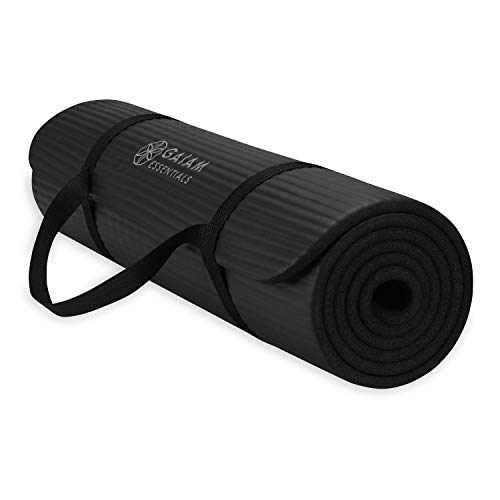
Gaiam Essentials Thick Yoga Mat
The Gaiam Essentials Thick Yoga Mat is the cushion pick. At 10mm thick, it is roughly twice as thick as a standard mat, and that extra padding makes a real difference for knees, hips, elbows, and wrists during floor work. If you have ever cut a session short because your knees hurt on a thin mat, this is the mat that solves that problem.
The mat is 72 inches long and 24 inches wide, so it suits taller practitioners as well as people who want extra length for stretching. It is made from NBR foam, which keeps the weight down to around three pounds despite the thickness, and it comes with an easy-cinch carrier strap. The textured surface gives reasonable traction for gentle and moderate practice.
The trade-off is stability. A soft, thick surface sinks under hands and feet, so standing balance poses can feel wobbly compared with a dense mat. Choose the Gaiam Essentials Thick Yoga Mat if joint comfort matters more than anything else, if you practice gentle or restorative yoga, or if you are starting out and want a forgiving mat.
Gaiam Premium Print Reversible Yoga Mat
The Gaiam Premium Print Reversible Yoga Mat is the style pick that still performs. It is a 6mm PVC mat with a printed design on one side and a different look on the other, so you can flip it to suit your mood or your room. The Elephant print covered here is a calm, detailed pattern, and the reversible design means one mat does the work of two.
Performance is solid for everyday practice. The 6mm thickness gives a good balance of cushion and stability, the textured surface provides reliable traction for standing and seated poses, and the mat is light enough at about two and a half pounds to carry to class without complaint. The mat measures 68 inches by 24 inches, the standard size that suits most practitioners.
Two things deserve a note. Printed mats can release a harmless odor when first unwrapped, and the maker suggests unrolling the mat and airing it out for two or three days before first use. The PVC surface can also feel slippery for very sweaty practice compared with natural rubber. Choose this mat if you want a dependable 6mm mat with two designs in one.
Manduka eKO SuperLite Yoga Mat
The Manduka eKO SuperLite is the travel mat in this guide, and it earns its place by solving a specific problem: how to practice properly away from home without carrying a heavy mat. At 1.5mm thick and about two pounds, it folds flat into a suitcase or backpack, and it still gives you a full 71-inch by 24-inch practice surface when unfolded.
The mat is made from natural tree rubber with a textured surface, so it grips better than most thin travel mats, and the material gives it a soft, responsive feel underfoot. It is the thinnest and lightest mat in the eKO family, designed for people who practice on the road, in hotel rooms, or outdoors on top of a softer surface.
The trade-off is cushioning. At 1.5mm, there is almost no padding between you and the floor, so knees and elbows will feel hard surfaces during floor work. This mat is not the right choice as your only mat if you practice gentle or restorative yoga at home. Choose the Manduka eKO SuperLite if you travel often, or if you already own a thicker mat at home and want a portable second mat.
Who Should Skip It
A dedicated yoga mat is not the right purchase for everyone. If you only stretch for a few minutes after workouts, a general exercise mat may be enough, and a specialist yoga mat adds little. If you practice exclusively on thick carpet, a thin mat can bunch and slide, so a heavier, denser mat may work better. People with a latex sensitivity should skip the two natural rubber mats here and choose the PVC or foam options instead.
Budget is another honest filter. A premium mat is worth it if you practice several times a week, because durability and grip pay off over years of use. If you are trying yoga for the first time, the extra-thick foam mat in this guide gives you comfort at a low commitment, and you can upgrade later once you know your practice style.
FAQ
How thick should a yoga mat be?
For most people, 4mm to 6mm is the right range, because it cushions knees and wrists without feeling unstable in standing poses. Choose 1.5mm to 3mm if you travel or want strong ground feel for balance work. Choose 10mm if your joints need extra padding for gentle or restorative practice.
Are natural rubber mats good for hot yoga?
Yes, natural rubber is one of the best materials for hot yoga, because the open-cell surface grips better as your hands get damp. The JadeYoga Harmony and the Manduka eKO SuperLite both use natural rubber. Avoid rubber if you have a latex sensitivity, and keep rubber mats out of direct sunlight, which can damage the material over time.
How do I clean a yoga mat?
Wipe the mat down after practice with a damp cloth and mild soap, then let it air dry flat before rolling it up. Rubber mats should be cleaned with a gentle spray made for natural rubber and never soaked, while PVC and foam mats can be wiped with a damp cloth.
Can I use a yoga mat on carpet?
You can, but a thin mat may bunch up or slide on soft carpet, which makes balance poses harder. A dense, heavy mat stays in place better on carpet, and a thick foam mat adds cushion on top of the carpet pile. If your practice space is carpeted and the mat keeps moving, try a heavier mat or practice on a hard floor area instead.
Final Verdict
The best yoga mat is the one that matches how you actually practice. The Manduka PRO is our top pick for most people, because its dense 6mm cushioning, wide surface, and long-lasting build suit daily practice at home or in a studio. If grip matters most, the JadeYoga Harmony is the better choice, and its natural rubber surface holds firm through sweaty sessions. If your joints need the most padding, the Gaiam Essentials Thick mat delivers comfort that thinner mats cannot match, while the Gaiam Premium Print Reversible mat is the best everyday option for people who want cushion and style in one mat. For travel, the Manduka eKO SuperLite stands alone: it folds flat, weighs about two pounds, and still gives you a full-size practice surface anywhere.
Product and ASIN Reference
| Product | ASIN |
|---|---|
| Manduka PRO Yoga Mat | B0000DZFXZ |
| JadeYoga Harmony Yoga Mat | B000ECDSYE |
| Gaiam Essentials Thick Yoga Mat | B07H9PZDQW |
| Gaiam Premium Print Reversible Yoga Mat | B00VV54NVK |
| Manduka eKO SuperLite Yoga Mat | B09NBRVJWK |
More from Amazon
Programs that pair well with the guide above. Offers and eligibility are set by Amazon and may change.
Free shipping on eligible items, Prime Video and more. Eligible new members can start with a free trial.
Start a Prime free trialAudiobooks and podcasts to listen to on the go. Eligible new members can start with a free trial.
Try Audible freeAd-free music streaming. Eligible new subscribers can start with a free trial.
Try Music Unlimited freeA free business account with business pricing and bulk-buying tools for work, shop or home office.
Create a business accountAs an Amazon Associate we earn from qualifying purchases.








Write Your Review
No reviews yet. Be the first to share your experience!