

Key takeaways
- Compare five paring knives for peeling, trimming and detail work, from the budget Victorinox Swiss Classic to the premium Wusthof Classic Ikon.
A paring knife is the small blade that does the work a chef knife cannot. It peels an apple in one long ribbon, cores a tomato, trims fat, deveins shrimp, and cuts garnishes with a control that a long blade never allows. It works best in the hand, with the thumb guiding the edge, rather than flat on a board.
A dull parer turns a quick job into a chore, while a sharp, balanced one makes peeling and trimming feel effortless. The five knives below range from a budget blade to a premium forged knife built to last for years.
As an Amazon Associate, we earn from qualifying purchases.
Quick Answer
For most cooks, the Victorinox Swiss Classic 3.25-inch paring knife is the pick: a light, sharp, straight-edge blade with a comfortable handle that suits everyday peeling and trimming. Cooks who want a forged blade should look at the Mercer Culinary Renaissance or the Wusthof Classic Ikon, while the Kuhn Rikon adds a safety sheath for storage and travel.
Table of Contents
- Quick Answer
- How to Choose
- The 5 Best Paring Knives
- Who Should Skip
- Frequently Asked Questions
- Final Verdict
- Product and ASIN Reference
How to Choose
Start with blade length. Paring knives usually measure between 3 and 4 inches, and that short length gives you control for in-hand work. A 3.25-inch blade suits small hands and tight detail work. A 3.5-inch blade is the most versatile size, long enough to slice a small apple on a board yet short enough to peel in the hand.
Next, look at the edge shape. A straight edge with a spear point is the standard paring shape, and it handles peeling, slicing, and trimming with clean cuts. A serrated edge grips slippery skins such as tomato and citrus, but it is harder to sharpen at home. A curved bird beak blade is a specialist shape.
Steel decides how the edge behaves over time. High-carbon stainless steel is the common choice: it resists rust, holds an edge through daily prep, and sharpens without fuss. Harder Japanese steels take a keener edge and hold it longer, but they can chip if dropped. Softer steels dull sooner yet come back quickly with a honing steel.
The handle matters as much as the blade, because a paring knife is gripped for close work. Look for a handle that fills the palm without forcing the fingers and stays secure when hands are wet. Textured handles help during long peeling sessions, while smooth hardwood can turn slippery. A bolster adds balance.
Finally, think about care and storage. Almost every maker recommends hand washing with warm water and mild soap, then drying at once, because dishwashers dull edges and loosen handles. A sheath protects the edge in a drawer and makes the knife safe to carry.
The 5 Best Paring Knives
1. Victorinox Swiss Classic 3.25-Inch Paring Knife

The Victorinox Swiss Classic is the paring knife most kitchens end up with, and the reason is simple: it is light, sharp, and easy to live with. The 3.25-inch straight-edge blade has a spear point that slips under skins and into cores, and the slim profile steers easily around an apple. The black handle is shaped for a comfortable grip, and the knife weighs so little that long peeling sessions do not tire the hand.
It is the budget pick here, and it is also the one many professional kitchens keep in a drawer for everyday prep. The trade is refinement: the stamped blade and plain handle feel workmanlike next to a forged knife, and the edge needs honing more often than a harder steel. Wash it by hand and dry it at once, and it will stay useful for years.
Specs
- Blade length: 3.25 inches
- Blade: High-carbon stainless steel, straight edge, spear point
- Handle: Black, contoured for a comfortable grip
- Construction: Stamped blade, lightweight build
- Care: Hand wash and dry promptly
- Tier: Budget
2. Mercer Culinary Renaissance M23540 3.5-Inch Forged Paring Knife

The Mercer Culinary Renaissance M23540 is the forged mid-range pick, and it shows what forging adds to a small knife. The 3.5-inch blade is precision-forged from high-carbon steel with a taper-ground edge, which gives it a solid, planted feel and an edge that holds up through daily prep. The length sits in the sweet spot: long enough to slice a small pear, short enough to peel in the hand.
The handle is shaped for comfort and a secure grip, even with wet hands. It suits garnishes, deveining shrimp, trimming beans, and slicing mango. The trade is care: like most forged knives, it should be washed by hand and dried completely, and it should not sit in a dishwasher.
Specs
- Blade length: 3.5 inches
- Blade: Forged high-carbon steel, taper-ground edge
- Handle: Ergonomic, built for a secure grip with wet hands
- Construction: Precision-forged, full tang
- Care: Hand wash with warm water and mild soap, dry completely
- Tier: Mid-range
3. Wusthof Classic Ikon 3.5-Inch Paring Knife, Creme

The Wusthof Classic Ikon is the premium pick in this guide, and it is built like the larger knives in the same line. The 3.5-inch blade is precision-forged from a single piece of high-carbon stainless steel, with the double-bolster handle design that balances the knife for a pinch grip. The creme handle gives the knife a distinct look, while the maker-stated hardness of 58 on the Rockwell scale points to an edge that holds well.
In use, the Classic Ikon parer feels planted and controlled, with enough weight to let the blade do the work. The trade is the tier, the highest here, and the care it asks for: hand washing and prompt drying, with no dishwasher.
Specs
- Blade length: 3.5 inches
- Blade: Precision-forged high-carbon stainless steel
- Hardness: 58 HRC, per the maker
- Handle: Creme, double-bolster design for balance
- Origin: Made in Germany, per the maker
- Care: Hand wash and dry promptly
- Tier: Premium
4. Kuhn Rikon Straight Paring Knife with Safety Sheath, 4 Inch
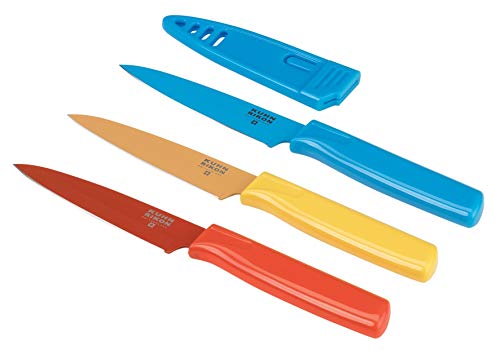
The Kuhn Rikon Colori paring knife is the pick for cooks who want a blade that is easy to store and carry. The 4-inch straight blade is made from Japanese stainless steel with a nonstick coating, which helps food release from the blade when slicing fruit and vegetables. The ergonomic handle has a finger guard, and the knife arrives with a safety sheath for the drawer or a picnic basket.
That sheath is the real difference: it protects the edge from nicks and fingers from the edge, so the knife suits kitchens where blades share a drawer. The trade is heft: the coated blade and molded handle feel lighter and less substantial than a forged knife, and the coating calls for gentle care rather than harsh scrubbing.
Specs
- Blade length: 4 inches
- Blade: Japanese stainless steel, nonstick coating, straight edge
- Handle: Ergonomic, with finger guard
- Storage: Safety sheath included
- Care: Hand wash, dry promptly
- Tier: Budget
5. HENCKELS Forged Accent 3.5-Inch Paring Knife, White Handle

The HENCKELS Forged Accent paring knife brings German engineering to the mid-range tier, with a forged blade and a white handle that stands out in a drawer. The 3.5-inch blade is razor-sharp, with a straight edge and a spear point suited to peeling, trimming, and coring. The forged construction gives the knife a solid feel, while the handle is shaped for a comfortable, controlled grip.
The white handle is both the charm and the caution: it looks clean and modern, but it shows stains more readily than a black handle. Choose it if you want a forged paring knife with a distinctive look at a mid-range tier.
Specs
- Blade length: 3.5 inches
- Blade: Forged stainless steel, straight edge, spear point
- Handle: White, shaped for a comfortable grip
- Construction: Forged, German engineered
- Care: Hand wash and dry promptly
- Tier: Mid-range
Who Should Skip
A paring knife is not the right tool for every job, and knowing its limits keeps both the knife and the cook safe. Skip a paring knife if the task needs a long blade: slicing a loaf of bread, carving a roast, or chopping a large squash all call for a chef knife, a bread knife, or a cleaver, and forcing a short blade through them risks the edge and the fingers. Cooks who only peel with a vegetable peeler may not need a dedicated parer at all.
A paring knife is also a poor choice for cooks who want a single knife for everything. Its short blade cannot rock through herbs or slice a large onion the way a chef knife can, so it works best as part of a small set rather than alone. Households with young children should store it in a block or a sheath, well out of reach. And if everyone in the house puts knives in the dishwasher, a sheathed budget pick may suit that kitchen better than a premium forged blade.
Frequently Asked Questions
What is a paring knife used for?
A paring knife handles small, close work: peeling fruit and vegetables, coring tomatoes, hulling strawberries, trimming fat, deveining shrimp, and cutting garnishes. Its short blade gives control for in-hand work.
What size paring knife is best for most cooks?
A 3.5-inch blade suits most cooks: long enough to slice small fruit on a board, short enough to peel in the hand. A 3.25-inch blade suits smaller hands and tighter detail work, while a 4-inch blade gives more reach.
Should a paring knife go in the dishwasher?
Most makers recommend hand washing with warm water and mild soap, then drying at once. Dishwasher heat and detergent dull the edge and can loosen the handle over time, so hand washing keeps a paring knife sharp longer.
Straight edge or serrated edge for a paring knife?
A straight edge is the better first choice: it peels, slices, and trims cleanly and is easy to sharpen at home. A serrated edge grips slippery skins such as tomato, but it is harder to sharpen, so it works best as a second parer.
Final Verdict
The best paring knife is the one that fits your hand and the way you cook. For most kitchens, the Victorinox Swiss Classic 3.25-inch paring knife is the smart first pick: light, sharp, and easy to live with at the budget tier. Cooks who want a forged blade should choose the Mercer Culinary Renaissance for the mid-range tier or the Wusthof Classic Ikon for the premium tier, while the Kuhn Rikon suits anyone who needs a sheath for safe storage. Wash it by hand, keep it sharp, and store it safely.
Product and ASIN Reference
| Product | ASIN |
|---|---|
| Victorinox Swiss Classic 3.25-Inch Paring Knife | B0061SWLKW |
| Mercer Culinary Renaissance M23540 3.5-Inch Forged Paring Knife | B0034612OK |
| Wusthof Classic Ikon 3.5-Inch Paring Knife, Creme | B001HWRFBW |
| Kuhn Rikon Straight Paring Knife with Safety Sheath, 4 Inch | B0030XNLQ4 |
| HENCKELS Forged Accent 3.5-Inch Paring Knife, White Handle | B09RTDRD7P |
More from Amazon
Programs that pair well with the guide above. Offers and eligibility are set by Amazon and may change.
Free shipping on eligible items, Prime Video and more. Eligible new members can start with a free trial.
Start a Prime free trialAudiobooks and podcasts to listen to on the go. Eligible new members can start with a free trial.
Try Audible freeAd-free music streaming. Eligible new subscribers can start with a free trial.
Try Music Unlimited freeA free business account with business pricing and bulk-buying tools for work, shop or home office.
Create a business accountAs an Amazon Associate we earn from qualifying purchases.





Write Your Review
No reviews yet. Be the first to share your experience!