

Key takeaways
- Compare the best food dehydrators for jerky, fruit, herbs and vegetables, with guidance on tray capacity, temperature range, airflow design and timers.
- Top Pick: COSORI Food Dehydrator CP267-FD
- Runner-up: Nesco FD-75A Snackmaster Pro Food Dehydrator
- Also consider: Presto 06301 Dehydro Digital Electric Food Dehydrator
A food dehydrator turns a glut of garden produce, a bargain tray of beef or a basket of apples into shelf-stable snacks that keep for months. The five machines in this guide cover the two designs that dominate home drying: stacking round trays with a fan in the lid or base, and box-style cabinets with a rear fan and removable shelves.
The differences that matter are practical rather than flashy. Temperature range decides whether you can dry delicate herbs gently and still hit the heat jerky needs. Tray area decides how much you can dry in one run. Airflow design decides whether you spend the afternoon rotating trays or simply walk away.
Each pick below is matched to a style of use, from a first inexpensive machine for weekend snacks to a large cabinet for serious preserving. The Quick Answer names the safest starting points, and the How to Choose section explains the specifications behind the recommendations.
As an Amazon Associate, we earn from qualifying purchases.
Quick Answer
The COSORI CP267-FD is the easiest dehydrator to recommend: stainless steel trays, a rear fan for even drying and a 48-hour timer in a compact cabinet. The Nesco FD-75A suits beginners who want expandable round trays, the Presto 06301 adds digital control at a friendly size, the Hamilton Beach 32100A keeps things simple, and the Excalibur 2400 brings horizontal airflow to small batches.
How to Choose
Airflow is the first decision. Stacking models blow warm air vertically through round trays; they are affordable and expandable, but food on different levels can dry at different rates. Box-style models with a rear-mounted fan push air horizontally across every tray, which dries more evenly and handles wet foods like fruit leather without dripping onto a heating element.
Temperature range comes next. Herbs and flowers dry best at the lowest settings, fruit sits in the middle, and jerky needs the top of the range, around 160 degrees Fahrenheit, for food safety. A machine with an adjustable thermostat covering roughly 95 to 165 degrees handles the full menu, while fixed-temperature models limit you to whatever the maker chose.
Capacity is measured in tray area, not tray count alone. Six square feet dries a respectable batch of apple chips or several pounds of jerky strips; smaller machines suit herbs and snacks. Expandable stacking models let you add trays later, which is a sensible way to start small.
Finally, consider the timer and the trays themselves. A timer with automatic shut-off lets a batch finish overnight without over-drying. Stainless steel trays clean more easily and last longer than plastic, while dishwasher-safe plastic trays keep the purchase price down. Noise also matters, because a dehydrator may run in the kitchen for ten hours at a stretch.
COSORI Food Dehydrator CP267-FD

The COSORI CP267-FD packs the features of a much larger cabinet into a countertop footprint. Six stainless steel trays provide about 6.5 square feet of drying space, a rear fan circulates air evenly, and digital controls set the temperature in small steps with a timer that runs up to 48 hours.
Specs
| Spec | Detail |
|---|---|
| Trays | 6 stainless steel |
| Drying area | About 6.5 square feet |
| Temperature range | 95 to 165 degrees F |
| Timer | Up to 48 hours |
| Power | 600 watts |
| Extras | Fruit roll sheet and mesh screen |
Stainless trays are the headline for anyone who has scrubbed jerky marinade off plastic mesh: they go in the dishwasher and shrug off sticky foods. The glass door lets you check progress without opening the cabinet and dumping heat, and the unit runs quietly enough for overnight use in most homes.
Six trays will not satisfy a hunter processing a whole deer, and the cabinet takes more counter width than a stacking model. For households drying fruit, herbs, jerky and yogurt regularly, it is the most complete package in this guide.
Nesco FD-75A Snackmaster Pro Food Dehydrator

The FD-75A is the machine that introduced many people to home drying, and its design explains why. A top-mounted fan and heating element push air down and across the trays, a design Nesco calls Converga-Flow, which keeps drips away from the motor and dries without tray rotation.
Specs
| Spec | Detail |
|---|---|
| Trays | 5 included, expands to 12 |
| Temperature range | 95 to 160 degrees F |
| Power | 600 watts |
| Fan position | Top mounted |
| Exterior | Opaque, light blocking |
| Extras | Fruit roll sheet, mesh screens |
The adjustable thermostat covers herbs through jerky, and the opaque exterior blocks light that degrades nutrients during long drying runs. Extra trays are sold in pairs, so the machine grows from five trays to twelve as your batches grow, which makes it a forgiving first purchase.
There is no timer and no on-off switch, so the unit runs until you unplug it, and the round trays take more storage space than flat shelves. Neither flaw matters much for weekend snack making, and the long track record of the design counts for a lot in a category full of short-lived models.
Presto 06301 Dehydro Digital Electric Food Dehydrator

The Presto 06301 brings digital control to the stacking format. Six trays stack on a base with a see-through cover, and a digital thermostat and timer let you set an exact temperature and walk away, with the machine shutting itself off when the run ends.
Specs
| Spec | Detail |
|---|---|
| Trays | 6 included, expands to 12 |
| Temperature range | 90 to 165 degrees F |
| Timer | Digital, up to 48 hours |
| Power | 750 watts |
| Fan position | Bottom mounted |
| Storage | Trays nest to save space |
The temperature range is the widest in this guide, starting low enough for herbs and proofing and reaching the heat jerky requires. When the run is done, the trays nest down so the whole unit stores in about half its working height, a thoughtful touch for small kitchens.
A bottom-mounted fan means marinade drips need watching and the base needs a wipe after messy batches. The included trays are plastic rather than metal. Within the stacking category, though, the combination of digital control, strong power and compact storage makes the 06301 easy to live with.
Hamilton Beach Digital Food Dehydrator 32100A

Hamilton Beach keeps the 32100A deliberately straightforward: five stackable trays, a clear lid so you can watch progress, digital temperature control and a 48-hour timer with automatic shut-off. It is a machine designed for people who want dried snacks without learning a new hobby.
Specs
| Spec | Detail |
|---|---|
| Trays | 5 stackable, BPA free |
| Drying area | About 4.2 square feet |
| Temperature range | 100 to 160 degrees F |
| Timer | Up to 48 hours, auto shut-off |
| Power | 500 watts |
| Extras | Fine mesh sheet included |
Continuous airflow means trays do not need rotating during a run, and the included fine-mesh sheet handles small items like herbs and berries that would fall through standard trays. The digital display is easy to read and the controls are limited to the settings you will actually use.
Capacity is the compromise: just over four square feet fills quickly when a whole orchard trip comes home. The temperature range also starts a little higher than some rivals, which matters for the most delicate herbs. As an uncomplicated first dehydrator for fruit chips, jerky and dog treats, it does the job well.
Excalibur 2400 Electric Food Dehydrator
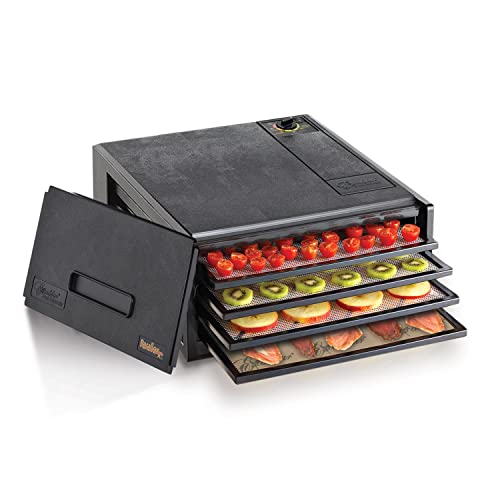
The Excalibur 2400 is the small member of a family known for horizontal airflow. Its rear fan and heating element push air across four square trays in parallel, the Parallexx system, so every tray dries at the same rate and flavors do not mingle between levels the way they can in vertical designs.
Specs
| Spec | Detail |
|---|---|
| Trays | 4 square trays |
| Drying area | 4 square feet |
| Temperature range | 95 to 165 degrees F |
| Power | 250 watts |
| Airflow | Horizontal, rear fan |
| Thermostat | Adjustable dial |
That even airflow is why Excalibur machines are popular for fruit leather, yogurt and raw-food recipes that need steady, gentle heat. The adjustable thermostat spans the full useful range, and the square trays hold sheets and mats more neatly than round ones.
Four square feet is a modest batch, there is no timer, and the fan is audible in a quiet kitchen. Buyers who regularly dry large harvests should look at the bigger cabinets, but for small households that value even results over volume, the 2400 delivers the family’s core technology at its smallest size.
Who Should Skip It
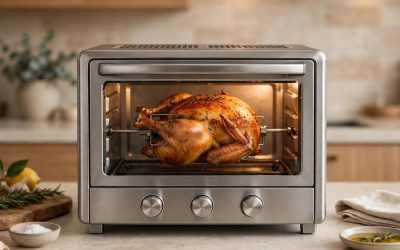
Skip a dehydrator if your kitchen already handles these jobs another way. An oven with a low setting or a convection air fryer covers occasional small batches of jerky or apple chips, and a dedicated machine will not earn its shelf space for a few runs a year.
Also reconsider if you have nowhere to run it. Dehydrators run for many hours and release food aromas the whole time; without a garage, porch or well-ventilated corner, a batch of onion or garlic can take over the house. Finally, if you mainly want to preserve a large garden harvest at peak season, a small five-tray model will frustrate you, and a large cabinet or a different preserving method makes more sense.
FAQ
How long does dehydrating take?
Most fruit takes six to twelve hours, vegetables a little less, and jerky typically four to eight hours, depending on thickness and moisture. Times are guidelines rather than guarantees, so start checking food near the early end of any range and add time as needed.
Do I need to rotate the trays?
Rear-fan cabinet models dry evenly enough that rotation is rarely necessary. Stacking models with a top or bottom fan benefit from swapping the top and bottom trays once during long runs, especially with wet foods like pineapple or marinated jerky.
Is homemade jerky safe?
Use lean meat, slice it evenly, and dry at the top of the machine’s temperature range. Many guides also recommend heating meat before or after drying for extra safety. Store finished jerky in airtight containers and refrigerate or freeze it for longer keeping.
What else can a dehydrator make?
Beyond fruit, vegetables and jerky, owners dry herbs and spices, make fruit leather and yogurt, proof bread dough on low settings, crisp nuts and seeds, and dry homemade pasta and pet treats. Crafters also use them for flowers and dough ornaments.
Final Verdict
The COSORI CP267-FD is the most complete dehydrator here, with stainless trays, even airflow and a proper timer. The Nesco FD-75A and Presto 06301 suit beginners who want to start small and expand, the Hamilton Beach 32100A keeps operation as simple as possible, and the Excalibur 2400 offers the most even drying in a compact cabinet. Pick by batch size first and airflow second, and the right machine becomes obvious.
More from Amazon
Programs that pair well with the guide above. Offers and eligibility are set by Amazon and may change.
Free shipping on eligible items, Prime Video and more. Eligible new members can start with a free trial.
Start a Prime free trialAudiobooks and podcasts to listen to on the go. Eligible new members can start with a free trial.
Try Audible freeAd-free music streaming. Eligible new subscribers can start with a free trial.
Try Music Unlimited freeA free business account with business pricing and bulk-buying tools for work, shop or home office.
Create a business accountAs an Amazon Associate we earn from qualifying purchases.





Write Your Review
No reviews yet. Be the first to share your experience!